

When it comes to precision linear motion applications, Micro Linear Rail has emerged as a game - changer. As a supplier of Micro Linear Rail, I often receive inquiries about the installation space requirements for these remarkable components. In this blog, I'll delve into the key factors that determine the installation space for Micro Linear Rail and provide insights to help you make informed decisions for your projects.
Understanding Micro Linear Rail
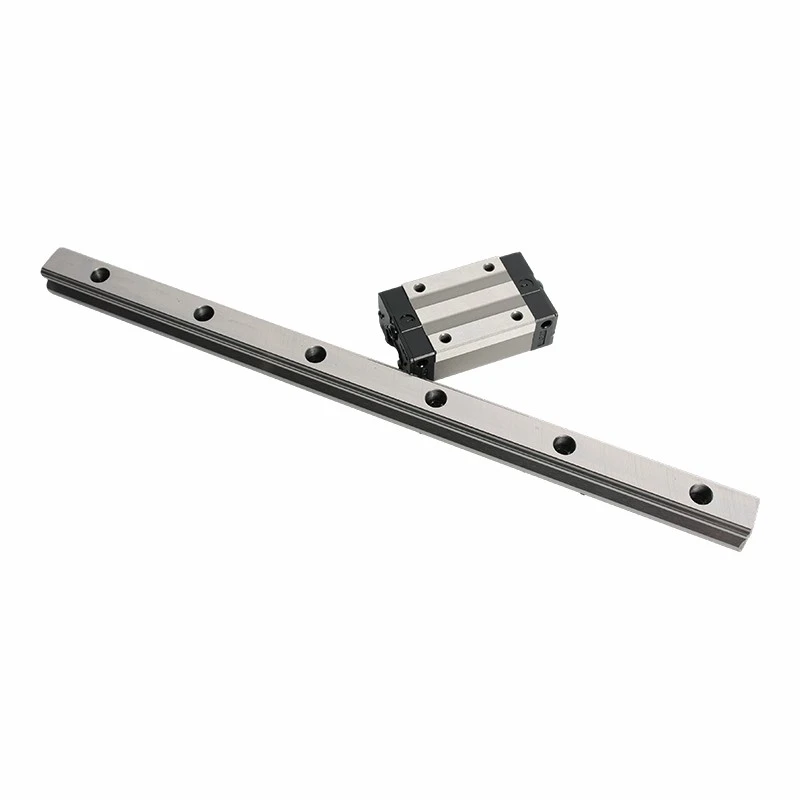
Micro Linear Rail, available at Micro Linear Rail, is designed for applications where space is at a premium and high - precision linear motion is required. These rails are characterized by their compact size, high load - carrying capacity, and excellent guiding accuracy. They are commonly used in industries such as semiconductor manufacturing, medical equipment, and precision instrumentation.
Factors Affecting Installation Space
Rail Length
The length of the Micro Linear Rail is a primary factor in determining the installation space. The rail length should be chosen based on the stroke length required for the application. The stroke length is the distance that the moving component needs to travel along the rail. For example, if you have a pick - and - place application where the gripper needs to move 100 mm, you need to select a rail with a length that can accommodate this movement. Additionally, you should also consider some extra length for end - stops and mounting hardware. A general rule of thumb is to add at least 20 - 30 mm to the required stroke length for these additional elements.
Rail Width
The width of the Micro Linear Rail also contributes to the installation space. Wider rails typically offer higher load - carrying capacity but require more space for installation. When selecting the rail width, you need to balance the load requirements of your application with the available space. For light - load applications, a narrower rail may be sufficient, while heavy - load applications may demand a wider rail. For instance, the Hgr20 Linear Guide Rail has a specific width that is designed to handle certain load ranges, and you need to ensure that your installation area can accommodate its width.
Mounting Clearance
Proper mounting clearance is essential for the installation of Micro Linear Rail. You need to account for the space required for mounting brackets, screws, and any other mounting hardware. The mounting brackets should have enough space to be securely attached to the base and the rail. In addition, you should also consider the clearance needed for any wiring or tubing that may run along the rail. For example, in a robotic arm application, there may be cables for power and control signals that need to be routed near the rail, so you need to leave enough space for these cables to avoid interference.
Side Clearance
Side clearance is another important aspect of installation space. The moving carriage on the Micro Linear Rail needs sufficient space on both sides to move freely without hitting any obstacles. The side clearance requirements depend on the size of the carriage and the potential for any external components to interfere with its movement. A minimum side clearance of 5 - 10 mm is often recommended, but this can vary depending on the specific application.

Installation Space Calculation Example
Let's take a simple example of a precision positioning system using a Micro Linear Rail. Suppose the required stroke length is 150 mm. Based on the rule of adding extra length for end - stops and mounting hardware, we choose a rail length of 180 mm. The selected rail has a width of 20 mm, and the mounting brackets require an additional 10 mm of space on each side for installation. The side clearance for the carriage is set at 8 mm on each side.
The total length of the installation space required along the rail axis is 180 mm (rail length). The total width of the installation space is 20 mm (rail width)+ 2×10 mm (mounting bracket space)+2×8 mm (side clearance)= 56 mm.
Special Considerations for Different Applications
Semiconductor Manufacturing
In semiconductor manufacturing, where precision is of utmost importance, the installation space for Micro Linear Rail needs to be carefully planned. The cleanroom environment in semiconductor facilities also imposes additional constraints. The rails should be installed in a way that minimizes the generation of particles, and there should be enough space for regular maintenance and cleaning. The wiring and tubing should be neatly organized to prevent any contamination risks.
Medical Equipment
Medical equipment often requires compact and reliable linear motion solutions. The installation space for Micro Linear Rail in medical devices needs to be designed to meet strict safety and hygiene standards. For example, in a medical imaging device, the rail should be installed in a way that allows easy access for calibration and maintenance while ensuring that there is no interference with other components of the device.
Precision Instrumentation
Precision instrumentation applications demand high - accuracy linear motion. The installation space should be free from vibrations and thermal variations. Adequate space should be provided for temperature - compensation mechanisms if required. In addition, the installation should be designed to minimize any external forces that could affect the accuracy of the rail.
Comparison with Other Linear Motion Solutions
Compared to other linear motion solutions such as ball screws or belt drives, Micro Linear Rail generally requires less installation space. Ball screws often need a longer axial length due to the screw shaft and the nut assembly, and belt drives may require additional space for the pulleys and tensioning mechanisms. Micro Linear Rail, with its compact design, can be a great choice when space is limited.
Conclusion
In conclusion, the installation space requirement for Micro Linear Rail depends on several factors, including rail length, width, mounting clearance, and side clearance. By carefully considering these factors and the specific requirements of your application, you can ensure a proper installation that maximizes the performance of the rail.
If you are in the process of selecting a Micro Linear Rail for your project and need more information about installation space or other technical details, feel free to contact us. We are here to help you make the best choice for your precision linear motion needs. Whether you are working on a small - scale research project or a large - scale industrial application, our team of experts can provide you with personalized solutions.
References
- Linear Motion Handbook, Industry Standard Publication
- Technical Datasheets of Micro Linear Rail Products