

Preload is a critical factor that significantly influences the performance of linear motion guides. As a trusted supplier of linear motion guides, we understand the intricate relationship between preload and the overall functionality of these essential components. In this blog, we will delve into the various ways preload affects the performance of linear motion guides, exploring its impact on accuracy, rigidity, and durability.
Understanding Preload in Linear Motion Guides
Before we discuss the effects of preload, it's important to understand what preload is in the context of linear motion guides. Preload refers to the intentional application of a force to the rolling elements (such as balls or rollers) within the guide. This force is applied in a direction that opposes the external load, effectively eliminating any clearance between the rolling elements and the raceways. By doing so, preload ensures that the guide operates with minimal play, enhancing its performance in various applications.
Impact on Accuracy
One of the primary benefits of applying preload to a linear motion guide is the improvement in accuracy. In applications where precise positioning is crucial, such as in CNC machining or semiconductor manufacturing, even the slightest amount of play can lead to significant errors. Preload eliminates this play, allowing the guide to move with greater precision.

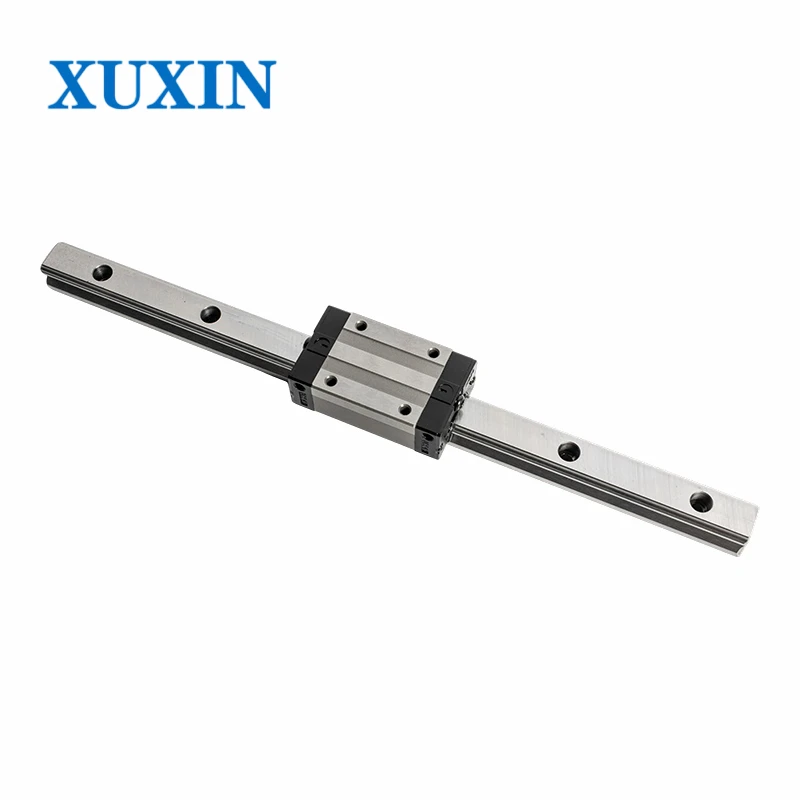
When a linear motion guide is preloaded, the rolling elements are held firmly against the raceways, reducing the amount of backlash. Backlash is the free movement that occurs when the direction of motion is reversed, and it can cause inaccuracies in positioning. By minimizing backlash, preload ensures that the guide moves exactly as commanded, resulting in more accurate and repeatable positioning.
For example, in a CNC milling machine, the linear motion guides are responsible for moving the cutting tool along the X, Y, and Z axes. If the guides have excessive play, the cutting tool may not move precisely to the desired location, leading to dimensional errors in the machined part. By using preloaded linear motion guides, the machine can achieve higher levels of accuracy, producing parts with tighter tolerances.
Impact on Rigidity
Another significant effect of preload is the increase in rigidity of the linear motion guide. Rigidity refers to the ability of the guide to resist deformation under load. In applications where high loads are present, such as in heavy-duty machining or material handling, a rigid guide is essential to maintain stability and prevent deflection.
Preload increases the contact force between the rolling elements and the raceways, effectively increasing the stiffness of the guide. This increased stiffness allows the guide to better withstand external loads without deforming. As a result, the guide can maintain its shape and position, even under high loads, ensuring smooth and stable operation.
For instance, in a large-scale material handling system, the linear motion guides are used to move heavy loads along a conveyor line. If the guides are not rigid enough, they may deflect under the weight of the load, causing the conveyor to become misaligned and reducing the efficiency of the system. By using preloaded linear motion guides, the system can maintain its rigidity, ensuring reliable and efficient operation.
Impact on Durability
Preload also has a positive impact on the durability of linear motion guides. By eliminating play and reducing the amount of vibration and noise, preload helps to minimize wear and tear on the rolling elements and the raceways. This, in turn, extends the lifespan of the guide, reducing the need for frequent maintenance and replacement.
When a linear motion guide is preloaded, the rolling elements are distributed more evenly across the raceways, reducing the stress concentration on any one point. This even distribution of stress helps to prevent premature wear and fatigue, ensuring that the guide can operate reliably for a longer period of time.
For example, in a high-speed automation system, the linear motion guides are subjected to frequent starts and stops, as well as high acceleration and deceleration forces. These dynamic forces can cause significant wear on the guides if they are not properly preloaded. By using preloaded linear motion guides, the system can reduce the wear and tear on the guides, increasing their durability and reliability.
Choosing the Right Preload
Selecting the appropriate preload for a linear motion guide is crucial to achieving optimal performance. The amount of preload required depends on several factors, including the application requirements, the load capacity of the guide, and the operating conditions.
In general, a higher preload will result in greater accuracy and rigidity, but it may also increase the friction and power consumption of the guide. On the other hand, a lower preload will reduce the friction and power consumption, but it may also compromise the accuracy and rigidity of the guide.
To determine the right preload for your application, it's important to consult with a knowledgeable supplier. At our company, we have a team of experts who can help you select the appropriate preload based on your specific requirements. We offer a wide range of linear motion guides, including Hgr Rails and GHH-CA Linear Guide, with different preload options to meet the needs of various applications.
Conclusion
In conclusion, preload plays a vital role in the performance of linear motion guides. By improving accuracy, increasing rigidity, and enhancing durability, preload ensures that the guides can operate reliably and efficiently in a wide range of applications. As a leading supplier of linear motion guides, we are committed to providing our customers with high-quality products and expert advice on preload selection.
If you are looking for a reliable linear motion guide for your application, we invite you to explore our extensive product range, including Linear Guide Rail Types. Our team of experts is ready to assist you in choosing the right guide and preload for your specific needs. Contact us today to start a discussion about your requirements and discover how our linear motion guides can enhance the performance of your system.
References
- "Linear Motion Guide Handbook," published by a leading manufacturer of linear motion components.
- "Precision Machine Design," a textbook on the design and operation of precision machinery.
- Industry research reports on the performance and applications of linear motion guides.