

Hey there! As a supplier of linear guide rails, I've seen firsthand how different standards can have a huge impact on the selection process. In this blog, I'm gonna break down the various standards and explain how they influence your choice when it comes to picking the right linear guide rail for your project.
Let's start by talking about the importance of standards. Standards are like the rulebook for linear guide rails. They ensure that the products meet certain quality, performance, and safety requirements. Different industries and applications have their own sets of standards, and it's crucial to understand these standards to make an informed decision.
One of the most common standards in the linear guide rail industry is the ISO (International Organization for Standardization). ISO standards cover a wide range of aspects, including dimensions, accuracy, and material properties. For example, ISO 14781 specifies the geometric accuracy of linear guideways. This standard helps you ensure that the guide rail you choose will provide the level of precision required for your application. If you're working on a high - precision machining project, you'll want to look for a linear guide rail that meets the relevant ISO accuracy standards.
Another important standard is the JIS (Japanese Industrial Standards). JIS standards are widely used in Japan and are also recognized globally. They are known for their strict quality control and detailed specifications. When it comes to linear guide rails, JIS standards can influence factors such as the load - carrying capacity and the surface finish of the rail. If you're in an industry that has strong ties with Japanese technology or if you prefer products that adhere to Japanese quality standards, then JIS - compliant linear guide rails might be the way to go.
Now, let's talk about how these standards affect the selection of linear guide rails in terms of different types. There are several types of linear guide rails, and you can learn more about them by clicking on this link: Linear Guide Rail Types.
Ball - type linear guide rails are one of the most popular types. They use balls as rolling elements, which provide low friction and high - speed operation. When selecting a ball - type linear guide rail, standards play a crucial role. For instance, the ISO standard for ball - type guide rails defines the size and shape of the balls, as well as the preload requirements. A higher preload, as specified by the standard, can improve the rigidity of the guide rail but may also increase the friction. So, you need to balance these factors based on your application's needs.
Roller - type linear guide rails, on the other hand, use rollers instead of balls. They are capable of carrying heavier loads compared to ball - type guide rails. Standards for roller - type guide rails focus on aspects such as roller diameter, roller length, and the contact angle between the roller and the rail. These standards ensure that the roller - type guide rail can handle the required load without excessive wear or deformation.
The size of the linear guide rail is also an important factor affected by standards. For example, if you need a 25mm linear guide rail, you can check out this link: 25mm Linear Guide Rail. The standards for a 25mm linear guide rail will define its cross - sectional dimensions, the mounting holes, and the overall length tolerance. These specifications are crucial to ensure that the guide rail can be properly installed and integrated into your system.
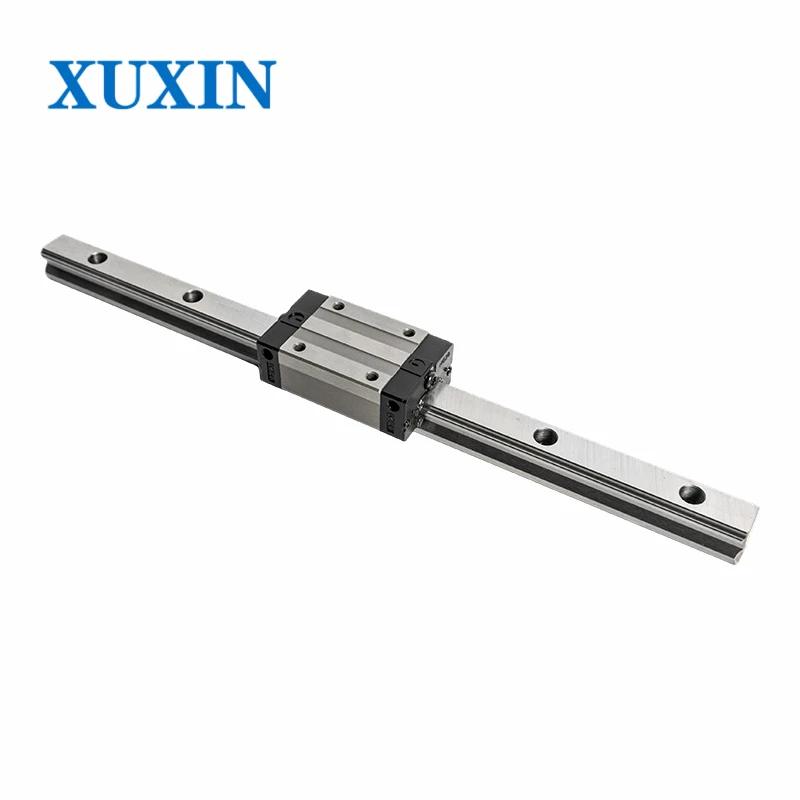

Accuracy is another key aspect influenced by standards. High - precision applications, such as in semiconductor manufacturing or optical equipment, require linear guide rails with extremely tight accuracy tolerances. Standards like ISO 14781 mentioned earlier set the limits for geometric accuracy, including straightness, flatness, and parallelism. If your application demands high accuracy, you'll need to look for a linear guide rail that meets the appropriate accuracy standards.
Load capacity is yet another factor affected by standards. Different standards define the maximum load that a linear guide rail can carry under various conditions. For example, a standard might specify the dynamic load rating and the static load rating of a guide rail. The dynamic load rating indicates the maximum load that the guide rail can withstand during continuous operation, while the static load rating is the maximum load that the guide rail can handle when it's not in motion. When selecting a linear guide rail, you need to ensure that its load - carrying capacity meets the requirements of your application.
Let's take a look at a specific example, the Hgr20 linear guide rail. You can find more information about it here: Hgr20 Linear Guide Rail. The Hgr20 linear guide rail is a popular choice for applications where space is limited. Standards for this type of guide rail will cover its small - scale dimensions, the load - carrying capacity suitable for its size, and the accuracy requirements. If you're working on a project that requires a compact linear guide rail, you'll want to make sure that the Hgr20 meets the relevant standards for your specific needs.
In addition to international standards, there are also industry - specific standards. For example, the automotive industry has its own set of standards for linear guide rails used in vehicle manufacturing. These standards focus on aspects such as durability, vibration resistance, and environmental compatibility. If you're in the automotive industry, you'll need to select a linear guide rail that meets these industry - specific standards.
When it comes to material standards, different linear guide rails are made from various materials, such as steel, aluminum, and stainless steel. Standards define the chemical composition, mechanical properties, and heat - treatment processes of these materials. For example, a standard for steel linear guide rails might specify the carbon content, the hardness, and the corrosion resistance. The choice of material can have a significant impact on the performance and lifespan of the linear guide rail.
Cost is also related to standards. Generally, linear guide rails that meet higher - level standards tend to be more expensive. However, investing in a high - quality guide rail that meets the appropriate standards can save you money in the long run. A guide rail that meets the standards is less likely to fail prematurely, reducing maintenance and replacement costs.
So, how do you go about selecting the right linear guide rail based on these standards? First, you need to clearly define your application requirements. Consider factors such as load capacity, accuracy, speed, and environmental conditions. Then, research the relevant standards for your industry and application. Look for linear guide rails that meet these standards.
As a linear guide rail supplier, I'm here to help you make the right choice. If you have any questions about which linear guide rail is best for your project, or if you want to learn more about the standards and how they apply to your needs, don't hesitate to reach out. We can have a detailed discussion about your requirements and find the perfect linear guide rail solution for you. Whether you're working on a small - scale DIY project or a large - scale industrial application, we've got the expertise and the products to meet your needs.
In conclusion, different standards play a vital role in the selection of linear guide rails. They ensure that the guide rails meet the necessary quality, performance, and safety requirements. By understanding these standards and how they affect various aspects of the linear guide rail, you can make an informed decision and choose the right product for your project. So, if you're in the market for a linear guide rail, take the time to consider the standards and don't hesitate to contact us for further assistance.
References:
- ISO 14781: Geometric accuracy of linear guideways
- JIS standards related to linear guide rails