

When it comes to mechanical systems, the choice of components can significantly impact performance, reliability, and safety. One common question that often arises in engineering applications is whether a bearing ball screw can be used in a vertical application. As a supplier of Bearing Ball Screw, I've encountered this query numerous times. In this blog post, I'll delve into the technical aspects, advantages, challenges, and considerations of using a bearing ball screw in a vertical setup.
Understanding Bearing Ball Screws
Before we explore the suitability of bearing ball screws for vertical applications, let's briefly understand what they are. A bearing ball screw is a mechanical linear actuator that translates rotational motion into linear motion with high efficiency and precision. It consists of a screw shaft, a ball nut, and a set of recirculating balls. The balls roll between the screw shaft and the ball nut, reducing friction and enabling smooth and accurate movement.
Bearing ball screws are widely used in various industries, including automation, robotics, machine tools, and aerospace, due to their high load-carrying capacity, low backlash, and excellent positioning accuracy.
Advantages of Using Bearing Ball Screws in Vertical Applications
There are several compelling reasons to consider using a bearing ball screw in a vertical application:
High Efficiency
One of the primary advantages of bearing ball screws is their high mechanical efficiency. Compared to other linear motion systems, such as lead screws, ball screws can convert up to 90% of the input energy into linear motion, resulting in less power consumption and reduced heat generation. This efficiency is particularly beneficial in vertical applications where the system needs to overcome gravity to move the load.
Precise Positioning
Bearing ball screws offer excellent positioning accuracy, making them ideal for applications that require precise control of linear motion. In vertical setups, accurate positioning is crucial for tasks such as lifting, lowering, and positioning heavy loads. The low backlash and high repeatability of ball screws ensure that the load can be moved to the desired position with minimal error.
High Load Capacity
Bearing ball screws are designed to handle high loads, making them suitable for vertical applications where the system needs to support the weight of the load. The load-carrying capacity of a ball screw depends on several factors, including the screw diameter, lead, and the number of ball circuits. By selecting the appropriate ball screw for the application, it is possible to achieve a high load capacity while maintaining smooth and reliable operation.
Long Service Life
When properly maintained, bearing ball screws can have a long service life. The rolling contact between the balls and the screw shaft and ball nut reduces wear and tear, resulting in less maintenance and longer intervals between replacements. This is especially important in vertical applications where the system may be subject to continuous operation and heavy loads.
Challenges and Considerations
While bearing ball screws offer many advantages in vertical applications, there are also some challenges and considerations that need to be addressed:
Gravity and Backdriving
In a vertical application, the force of gravity acts on the load, which can cause the ball screw to backdrive. Backdriving occurs when the load overcomes the frictional forces in the ball screw and causes it to rotate in the opposite direction. This can lead to uncontrolled movement of the load and potentially cause damage to the system.
To prevent backdriving, a brake or a counterbalance system may be required. A brake can be used to hold the load in place when the system is not in operation, while a counterbalance system can help to offset the weight of the load and reduce the force required to move it.
Lubrication
Proper lubrication is essential for the smooth and reliable operation of a bearing ball screw. In a vertical application, gravity can cause the lubricant to drain away from the ball screw, leading to increased friction and wear. To ensure adequate lubrication, it is important to use a lubricant that is specifically designed for ball screws and to apply it regularly.
Installation and Alignment
Correct installation and alignment of the bearing ball screw are crucial for its performance and longevity. In a vertical application, the ball screw must be installed vertically and aligned precisely to ensure that the load is evenly distributed and that the balls can roll smoothly between the screw shaft and the ball nut. Any misalignment can cause increased friction, wear, and premature failure of the ball screw.
Selecting the Right Bearing Ball Screw for Vertical Applications
When selecting a bearing ball screw for a vertical application, several factors need to be considered:
Load Capacity
The load capacity of the ball screw must be sufficient to support the weight of the load and any additional forces that may be applied during operation. It is important to calculate the maximum load that the ball screw will be required to carry and to select a ball screw with a load capacity that exceeds this value.
Lead and Pitch
The lead and pitch of the ball screw determine the speed and the distance that the load will move for each revolution of the screw shaft. In a vertical application, the lead and pitch should be selected based on the required speed and the load capacity of the system. A higher lead will result in a faster linear speed, but it may also reduce the load capacity of the ball screw.
Screw Diameter
The screw diameter affects the load capacity and the stiffness of the ball screw. A larger screw diameter will generally have a higher load capacity and greater stiffness, but it may also be more expensive and require more space. It is important to select a screw diameter that is appropriate for the application based on the load requirements and the available space.
Nut Type
There are several types of ball nuts available, each with its own advantages and disadvantages. The choice of nut type will depend on the specific requirements of the application, such as the load capacity, the speed, and the accuracy. Some common types of ball nuts include single-nut, double-nut, and preloaded nuts.
Examples of Vertical Applications
Bearing ball screws are used in a wide range of vertical applications, including:
Elevators and Lifts
In elevators and lifts, bearing ball screws are used to provide smooth and precise vertical movement of the car. The high load capacity and the accurate positioning of ball screws make them ideal for this application, where safety and reliability are of utmost importance.
Machine Tools
In machine tools, such as CNC milling machines and lathes, bearing ball screws are used to control the vertical movement of the cutting tool. The high efficiency and the precise positioning of ball screws enable the machine to achieve high accuracy and productivity.
Robotics
In robotics, bearing ball screws are used to provide vertical movement of the robot arm. The high load capacity and the excellent positioning accuracy of ball screws allow the robot to perform tasks with precision and repeatability.
Conclusion
In conclusion, a bearing ball screw can be used in a vertical application, but it is important to carefully consider the advantages, challenges, and requirements of the application. By selecting the right ball screw, implementing appropriate measures to prevent backdriving, ensuring proper lubrication, and correct installation and alignment, it is possible to achieve smooth, reliable, and efficient vertical movement.
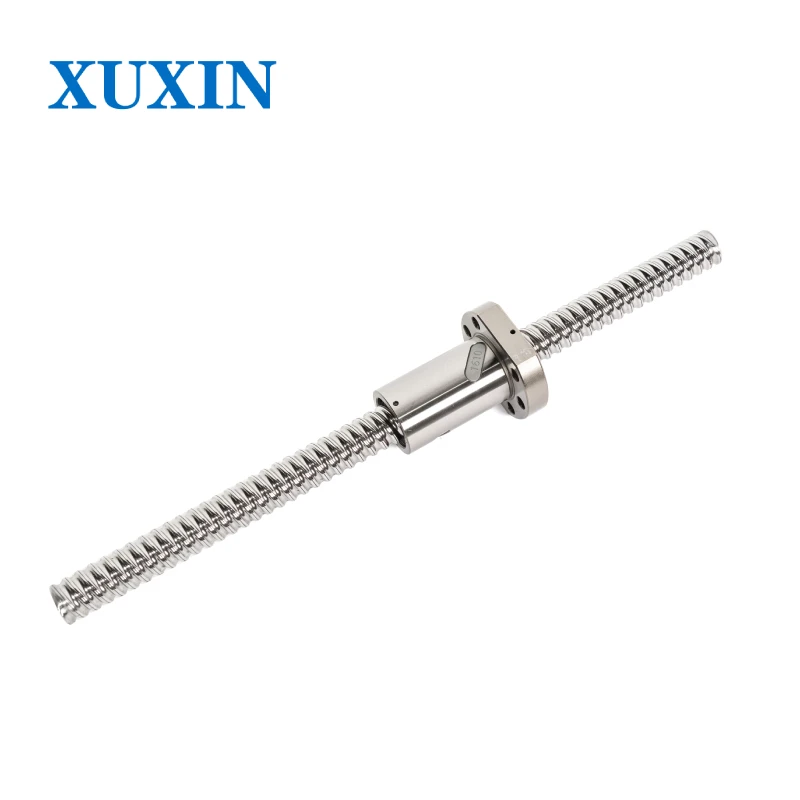

If you are considering using a bearing ball screw in a vertical application, I encourage you to contact us to discuss your specific requirements. As a leading supplier of Bearing Ball Screw, we have the expertise and the experience to help you select the right ball screw for your application and to provide you with the support and guidance you need to ensure its successful implementation.
We also offer a wide range of 1605 Ball Nut and 2005 Ball Screw products that are suitable for various applications. Our team of experts is always available to answer your questions and to assist you with your purchase.
Contact us today to start the conversation and to explore how our bearing ball screws can enhance the performance and reliability of your vertical application.
References
- "Ball Screws: Design, Selection, and Application" by THK Co., Ltd.
- "Mechanical Design Handbook" by Robert C. Juvinall and Kurt M. Marshek.
- "Motion Control Handbook" by Peter Nachtwey.